
Why This Exists
The Problem
The system has reached a tipping point. The current resource that allowed our country to thrive has been tapped. That resource is the labor class, who also happens to be the consumer class. We don't have the money to consume, and massive capital corporations require innovation and growth for the sake of acquiring more capital, hence not allowing labor to make the money to consume.
Everyone feels it. But we're not talking about it clearly.
Instead, we're trapped in tribal politics and culture wars that have nothing to do with what's actually wrong. We argue about divisive issues while the real problems like wealth distribution, lack of agency, economic frustration, go unaddressed by the 24 hour news cycle and many elected officials.
I'm here to openly explore how we got here and what we can do about it. I'm not an investigative journalist, I'm a UX designer who's been contributing to corporate life for the past 15 years, and think that user-centered design thinking is just what we need in these times, because it relies on quantitative and qualitative data, and is focused on improving users pain points within a system.
My Assumption
I keep coming back to this one pattern, which I see as our current paradigm, shaping all of our reactive thoughts:
- Step 1: Labor class (everyday working people)
- creates value by building services and products
- gets paid a wage to cover bills, but can't invest in assets
- step 2: Wealthy Capital/Producer class
- legally owns and captures that value
- has capital to invest in assets, wealth compounds
- Step3: Consumer class (who are also the Labor class)
- purchases the value they themselves created back at a premium (aka the rich get richer)
- Repeat and watch (or scroll) as the wealth distribution gap in America gets more and more depressing to look at every decade
When broken down into its most simple parts, that is our system at play. Our current system's incentive structure rewards seeking control, so as not to be the one who is controlled. It's has been iterated over generations, based on the input of the most influential powers that could act as a foothold for our nations growth. The problem was that, when we were building this economic powerhouse, the working class kept getting squeezed, and couldn't organize well enough to maintain fair representation in that economy.
To me, for all of the growth our system has brought us, it's done so on the backs of the people who actually made it happen, without the representation the working class. It's unsustainable, and it's always been this way. You can throw this model on practically every past empire, and in every major period of history in America.
Who This is For
This isn't about your income bracket. It's not whether you're in the top 1% or the bottom 50%... It's about whether you believe the economy should serve people, or people should serve the economy.
If you're a wealthy capital owner reading this: You're not the enemy by default. You're probably motivated by your family to operate in a system built around certain incentives, and it has served you well. The question is whether you think those incentives are serving all of us.
If you're earnestly struggling to survive: You're not failing. Our system is.
We're working for people who believe we can do both: reward excellence and build safety nets. Encourage innovation and protect dignity. Compete fiercely and cooperate fundamentally.
Discovering Solutions
That assumption leads me to think: The only way out is to build what we can call, "the peoples' economy." To turn our frustration into positive action that is sustainable, we must build competitive infrastructure that is democratically organized, by the the very people who build the value: the consumers and laborers who make up 70% of the US GDP annually.
The problem is representation. We're all a part of how we got here, but our voices have been drowned out by the ruling class. We need affordable healthcare, they need to make it over-complicated. We need a living wage, but they need more returns, we need equal representation for the value we provide, but they need more profits.
But here's the thing: It's not any one company, it's the nature of the current system dynamics at play. It's always going to be some company at the top fighting for favor or control. We've just built a system that incentivizes the greedy, or the fearful to hoard control, so they are not controlled. Even if it's not maniacal in nature, it's bad for all of us.
We are the product, we should decide how it's valued, and how we're paid. Not by regulating big business, but by carving out our own space and competing in industry with self-assigned democratic values built right into the business model.
Imagine what a world of major co-ops competing for the best labor and ideas would look like. That totally reshapes the paradigm. That's an economy built by workers, for workers. But, the ruling class has never, and will never give up their position of leverage, as history has shown us time and time again.
The difference now is, we have access to the same tech the ruling class, but we don't have the infrastructure built to organize around it yet. We need enterprise level (competitive to corporations), open source solutions to every industry. We need to do this while we organize for reform, rather than relying on reform alone. Culture drives policy, let's build democratic values in business, and reshape the culture.
The Approach
My goal is to stay away from tribal politics and culture wars by doing the most objective analysis I can. I'm using user-centered thinking and systems design methodology to review the US government as a product and the people it serves. I'm breaking it down from a systems and user experience standpoint and understanding the interactions between incentive structures.
UX design starts with pain points. Your frustration is valid. The problem isn't that you feel it; the problem is we're dragged into defending narratives instead of solving problems. By starting with pain points (not ideology), we can find common ground, discuss our differences with shared values, uncover what's actually true, and resist the lies being elevated as fact in our current media and engagement algorithm landscape.
I'm exploring history and our current state, using data, that shows trends and how it relates to everyday working/consumer class Americans. I'm using AI to help process the volume of information because there's so much to dig through. Hopefully, by the end of this exploration, we can stand strong on whatever we discover together.
The Opportunity
My assumption is that there is a way out and a way forward. It includes all of us. The peoples' economy won't build itself, and the time is ripe. We should hold ourselves accountable and make the world we want to see together. We can reshape the culture of business to work for the common man, for our shared story that's been forgotten.
The things that everybody wants are still there. We still have a shared story, but it's been lost in the churn of the news cycles in the age of social media. I want to aggregate information and vocabulary here in a way that speaks to the needs of the common person, while providing the context and data that shows us that, IF everyday American's on the left and right can reunite as workers and consumers, we win.
The frustration is that hierarchy has always existed throughout human history. But it doesn't have to be this way. Supply-side economics and the "rational economic man" model don't apply in 2025. Everyone is more educated. Everyone has seen more. Everyone has more empathy. We're all ready to go together. The carrot and stick is not meeting the moment for our domestic social and economic issues.
Where This is Headed
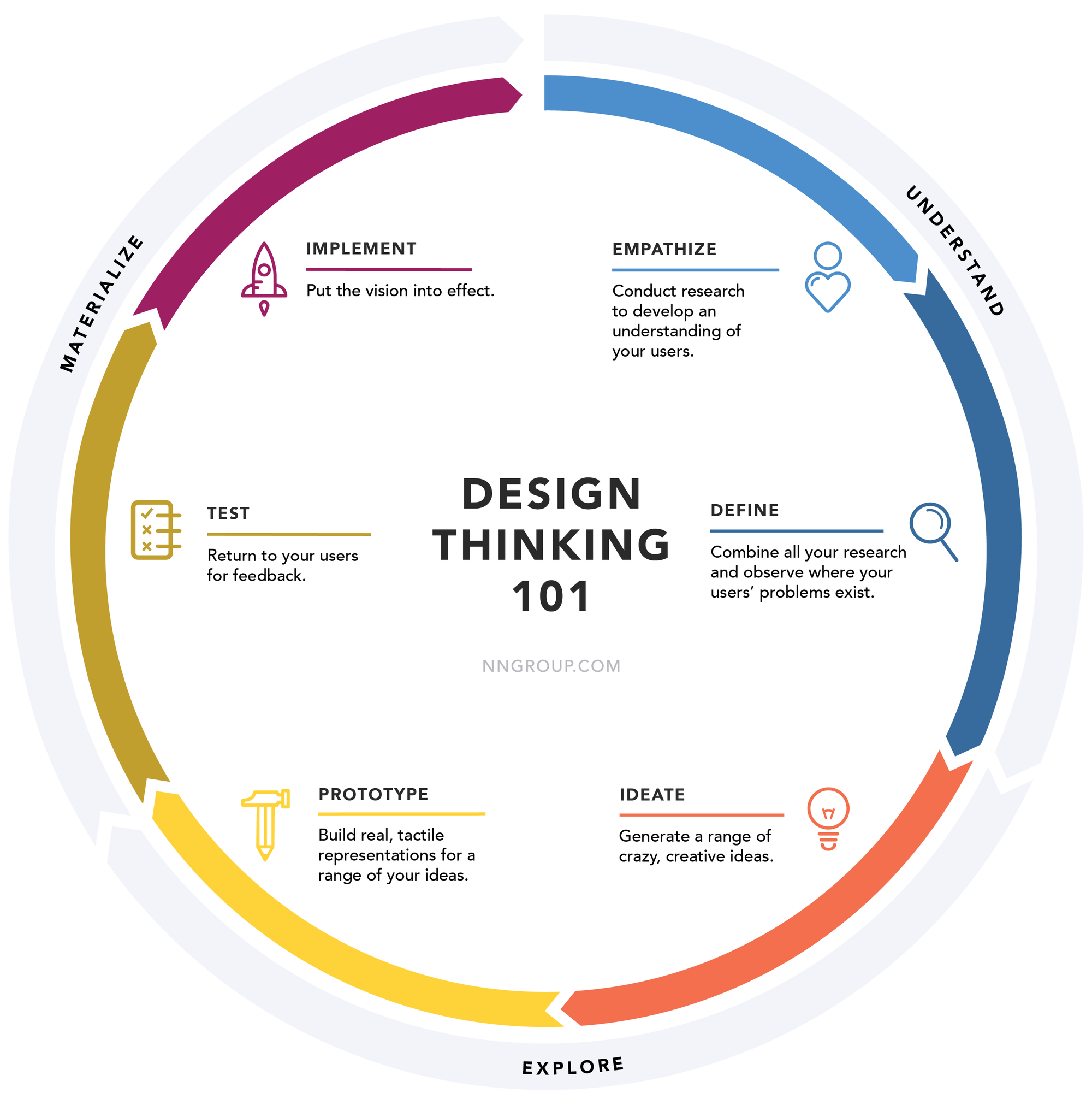
The design thinking process, as defined by NNgroup.com has a defined, but flexible process. We're using these methods to inspect the US socioeconomic system as a product we need to understand and improve for our users (everyone).
Here's the flow in simple terms:
Empathize, Define, Ideate, Prototype, Test, Implement.
 Sarah Gibbons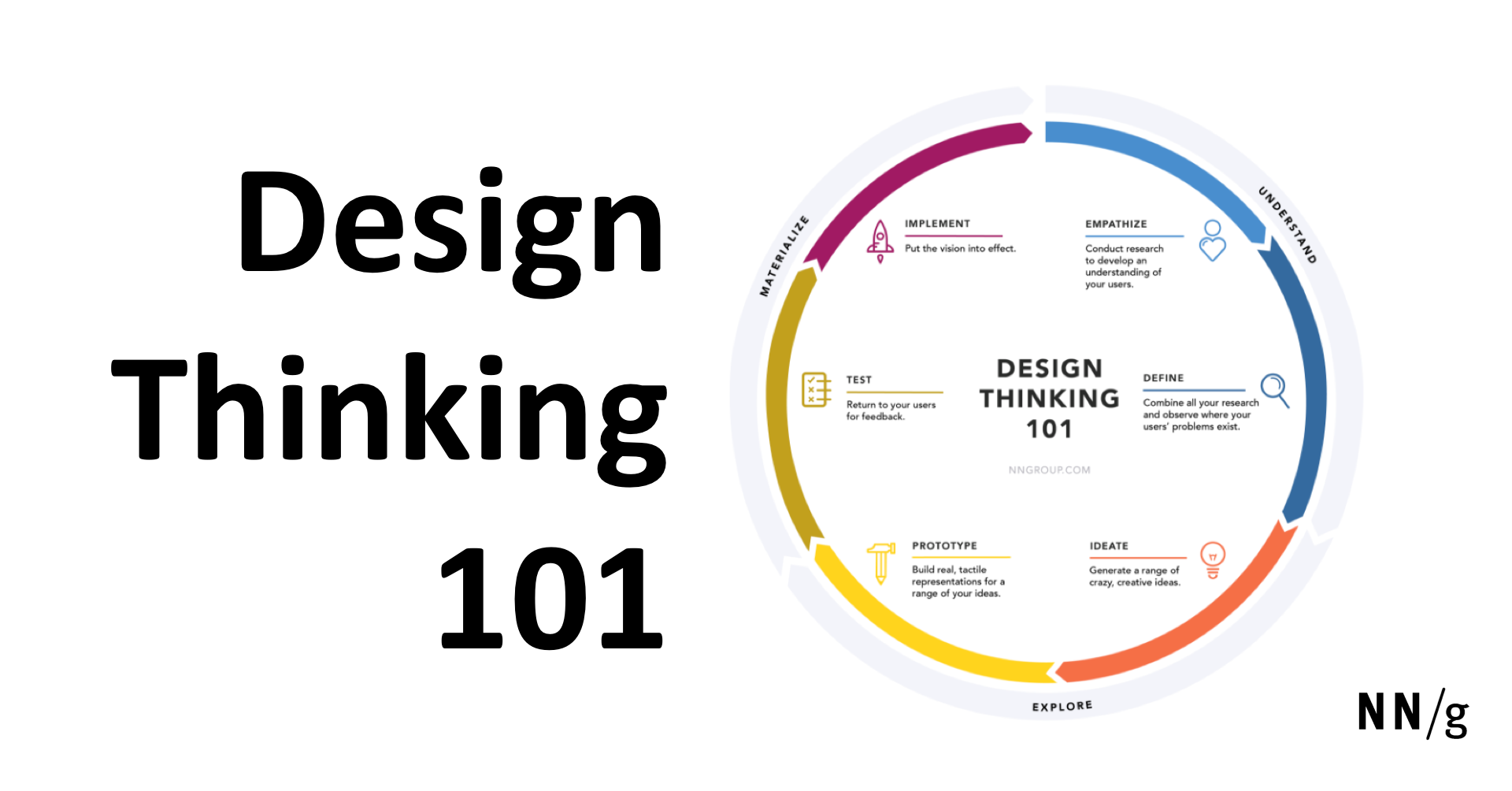
How This Process Informs Our Work
- Empathize
- Insert Token Research Chats: We're publishing research chats with our custom AI research tool. It's been meticulously tuned to account for bias, seek accountability without judgement, for the sake of labor and consumer class needs.
- This isn't to create a bias, but to acknowledge my own bias in the research process.
- These chats produce a wealth of insight and sources, which we use to build on our work and check our assumptions.
- We're directly publishing these research chats on our platform so you can join in the discovery process.
- We'll be seeking your feedback in comments, and publishing consensus research on the comments once there is enough participation.
- Insert Token Research Chats: We're publishing research chats with our custom AI research tool. It's been meticulously tuned to account for bias, seek accountability without judgement, for the sake of labor and consumer class needs.
- Define and Ideate
- Data Dive dashboards: Based on our published research findings/exploration, Data Dives serve to help frame our discovery and confirm, expand upon or revise our assumptions.
- Instead of writing articles, we're presenting clearly defined and sourced data in an easy to follow, infographic format.
- The goal is to aggregate all of this data into meaningful bits, that help equip us to be reminded of and speak confidently about our shared story, and what we can do about it.
- Data Dive dashboards: Based on our published research findings/exploration, Data Dives serve to help frame our discovery and confirm, expand upon or revise our assumptions.
- Ideate and Prototype:
- Designing The Peoples' Economy: This is where building something together really starts. Once we get through the necessary research to empathize and define the problem as objectively as possible, I'm going to to need all of you smart and nerdy civic minded individuals to join me in building a decentralized framework that identifies every aspect of what we need to build and organize a democratic work force that can compete in our current global stage.
- I know this is a big endeavor, but every giant company does it for themselves, why can't we do it for us? We got this.
- This may seem like overkill to you, but this process is how we "uncover" what's needed, allowing us to get away from the inflaming culture war narrative that our media insists on pushing.
- This can lead to constructive debate and pro-policy dialogue. This allows us to speak to the PAIN POINTS of everyone, not just the ones on your side of the culture war.
- Research suggests most Americans agree on over 100 of 155 bills in Congress. Concensus isn't the problem, the media fueled division narrative is dividing us and making us lose.
- Designing The Peoples' Economy: This is where building something together really starts. Once we get through the necessary research to empathize and define the problem as objectively as possible, I'm going to to need all of you smart and nerdy civic minded individuals to join me in building a decentralized framework that identifies every aspect of what we need to build and organize a democratic work force that can compete in our current global stage.
- Test:
- One Tribe: A column on our platform dedicated to shining a light on people and organizations who are already employing the peoples economy.
- We can discuss and dive deeper with AI research to see how these exemplary implementations could scale, and explore what society could look like if this was the norm.
- One Tribe: A column on our platform dedicated to shining a light on people and organizations who are already employing the peoples economy.
- Implement:
- My hope is that this project will serve as a judgement free zone, where we can all explore our pain points in this system we created together, and to foster conversation that brings us together because of our diversity, ultimately leading to us all be the change we want to see in the world.